Usain Bolt's 9.58
The fastest 100 metres ever run. How Usain Bolt ran 9.58 seconds in Berlin in 2009, why the jump from his old record was so huge, and why the mark still stands today.
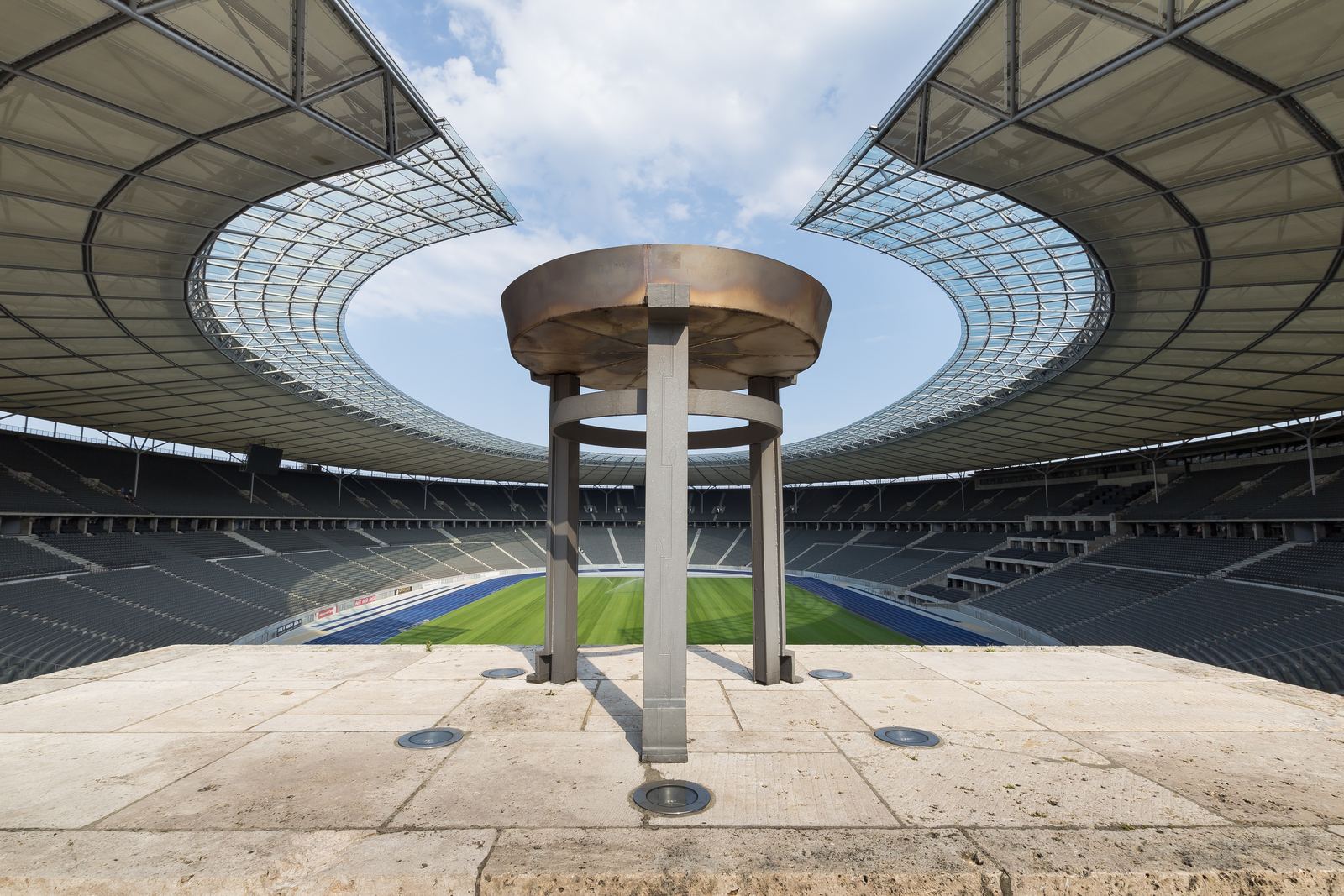
The Berlin track: Jan Künzel, CC BY-SA 4.0
The final everyone waited for
Berlin billed the 2009 world championship 100 metres as a duel. On one side stood Tyson Gay of the United States, the reigning world champion, who had run 9.77 that summer. On the other stood Usain Bolt of Jamaica, the Olympic champion and world record holder, whose best that season was 9.79.
Bolt had already shown his speed in the rounds, clocking 9.89 in the semi-final, the fastest semi-final ever run at the time. Even so, few people expected what came next on the evening of 16 August 2009.
Nine point five eight
By 20 metres Bolt held a tiny lead. From there he simply pulled away, and the clock stopped at 9.58 seconds. Gay ran 9.71, one of the fastest times in history, and still finished well behind. The race was so fast that several finalists said they were happy just to have been part of it.
The new mark cut more than a tenth of a second from Bolt's own 9.69 at the Beijing Olympics a year earlier. That was the biggest single improvement to the 100 metres record since electronic timing began.
How a tall man ran so fast
Sprinters are usually compact, because short legs turn over quickly. Bolt was about 1.95 metres tall, and his long stride meant he needed fewer steps than his rivals to cover the distance. In Berlin he also started better than usual, with a reaction time of 0.146 seconds.
Measurements during the race put his top speed at about 12.3 metres per second, roughly 44 kilometres per hour. He has also written that he has scoliosis, a curve in the spine, which makes his stride slightly uneven. Scientists have studied it without agreeing whether it helped or hurt.
A record that refuses to fall
Days later, in the same stadium, Bolt lowered the 200 metres world record to 19.19 seconds. Both marks still stand in 2026, more than sixteen years later, which is remarkable in a sport where records usually fall every few seasons.
Bolt went on to win eight Olympic gold medals before retiring. His autobiography even carries the famous number in its title, and when he later played in football matches for fun and charity he wore 9.58 on his shirt.
What sprinters can learn from it
Bolt's coach believed his biggest gains came from technique, not just talent: better balance through the bends, a quicker stride rate and a sharper start. Those are the same areas young sprinters work on today.
Most of a 100 metres race is decided by how well an athlete accelerates and then holds top speed. Even Bolt slowed slightly in the final metres. The winner is usually the runner who slows down the least.
- The Berlin track: Jan Künzel, CC BY-SA 4.0
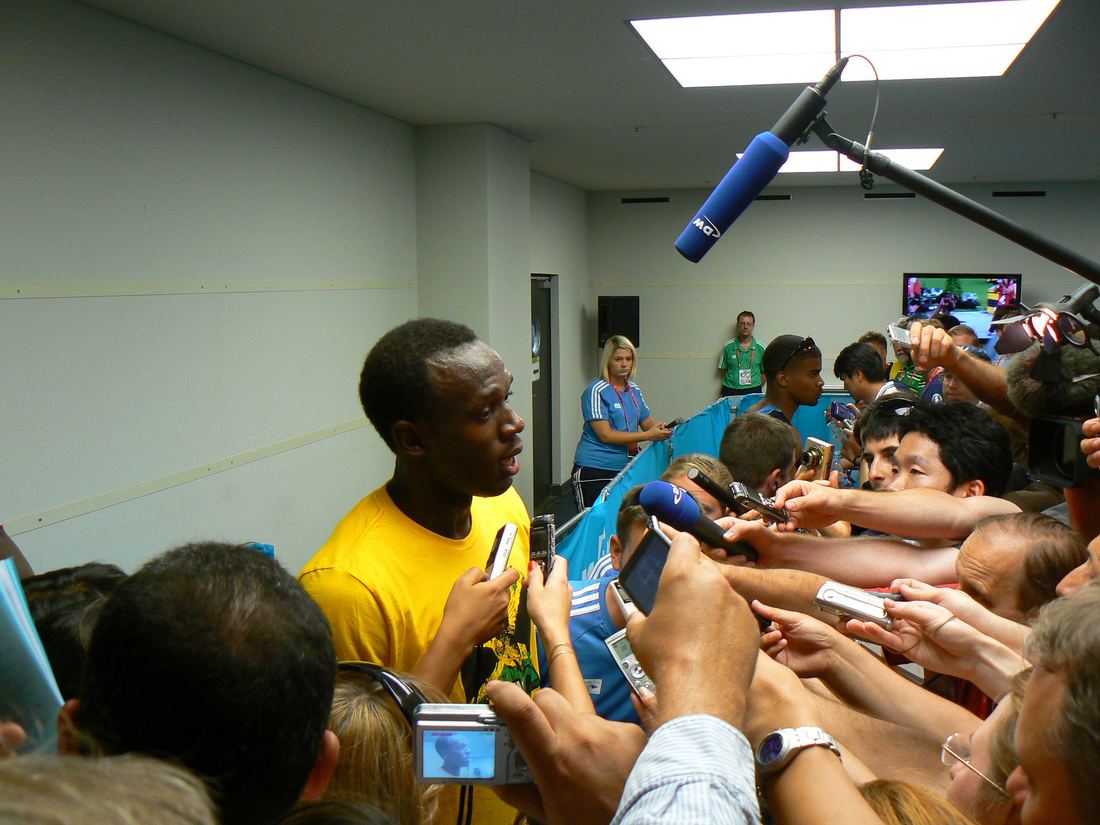
- Berlin, 2009: PatBirgan, CC BY-SA 4.0
Text written by Shining Champion.
← Mikaela Shiffrin's Record RunBannister's Four-Minute Mile →