Bannister's Four-Minute Mile
The barrier that fell in 1954. On 6 May 1954 a junior doctor named Roger Bannister ran a mile in 3:59.4. The story of the pacers, the wind and the record that lasted 46 days.
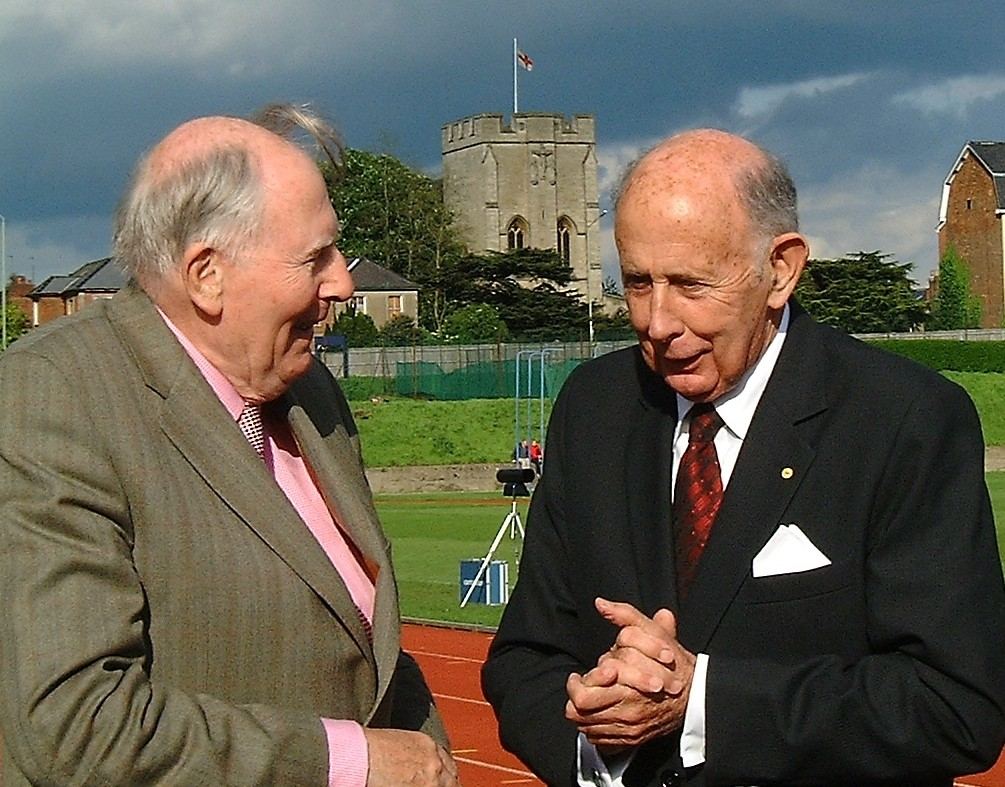
Bannister and Landy, 2004: GooglerW, CC BY-SA 4.0
A barrier in the mind
For years the mile record sat just above four minutes, and many people treated the mark as a kind of wall. Swedish runners had come within about two seconds in the 1940s, and in the early 1950s Roger Bannister of Britain, John Landy of Australia and Wes Santee of the United States were all chasing it.
Bannister was not a full-time athlete. He was a medical student and then a junior doctor in London, and for a long stretch he could train for only about an hour a day.
Wind, nerves and a 6 pm start
The attempt came at a meeting between Oxford University and the Amateur Athletic Association at the Iffley Road track. The wind blew hard all day, and Bannister twice said he would rather wait for another chance. Shortly before the start the wind eased, and he decided to go.
His friends Chris Brasher and Chris Chataway did the pacing. Brasher led through the first two laps, then Chataway took over. With roughly 275 yards to go Bannister kicked past him and ran the last lap in just under a minute.
The time was three
The meeting announcer, Norris McWhirter, built the suspense by reading out the details first. As soon as he said the time was three, the cheering of about 3,000 spectators drowned out the rest. The full time was 3 minutes 59.4 seconds.
The record did not last long. Just 46 days later John Landy ran 3:57.9 in Turku, Finland. That August the two men met at the Commonwealth Games in Vancouver, and Bannister won what became known as the Miracle Mile, with both runners under four minutes.
What came after
Once the barrier fell, others followed quickly. Today, according to World Athletics statistics, just over 2,000 athletes have run a mile in under four minutes, including high school runners.
Bannister retired from racing at the end of 1954 and spent about forty years working in medicine, mainly neurology. He later became the first chairman of Britain's Sports Council and was knighted in 1975, yet the morning of 6 May 1954 is still remembered as the day a limit turned out to be only an idea.
How to picture the pace
A four-minute mile means running each of four laps of a standard track in about 60 seconds, back to back. For most fit adults, a single lap at that speed is an all-out sprint.
Bannister's last lap of just under a minute came after three hard laps already. That finishing kick, built on short daily sessions around his studies, is what turned years of near misses into history.
- Bannister and Landy, 2004: GooglerW, CC BY-SA 4.0
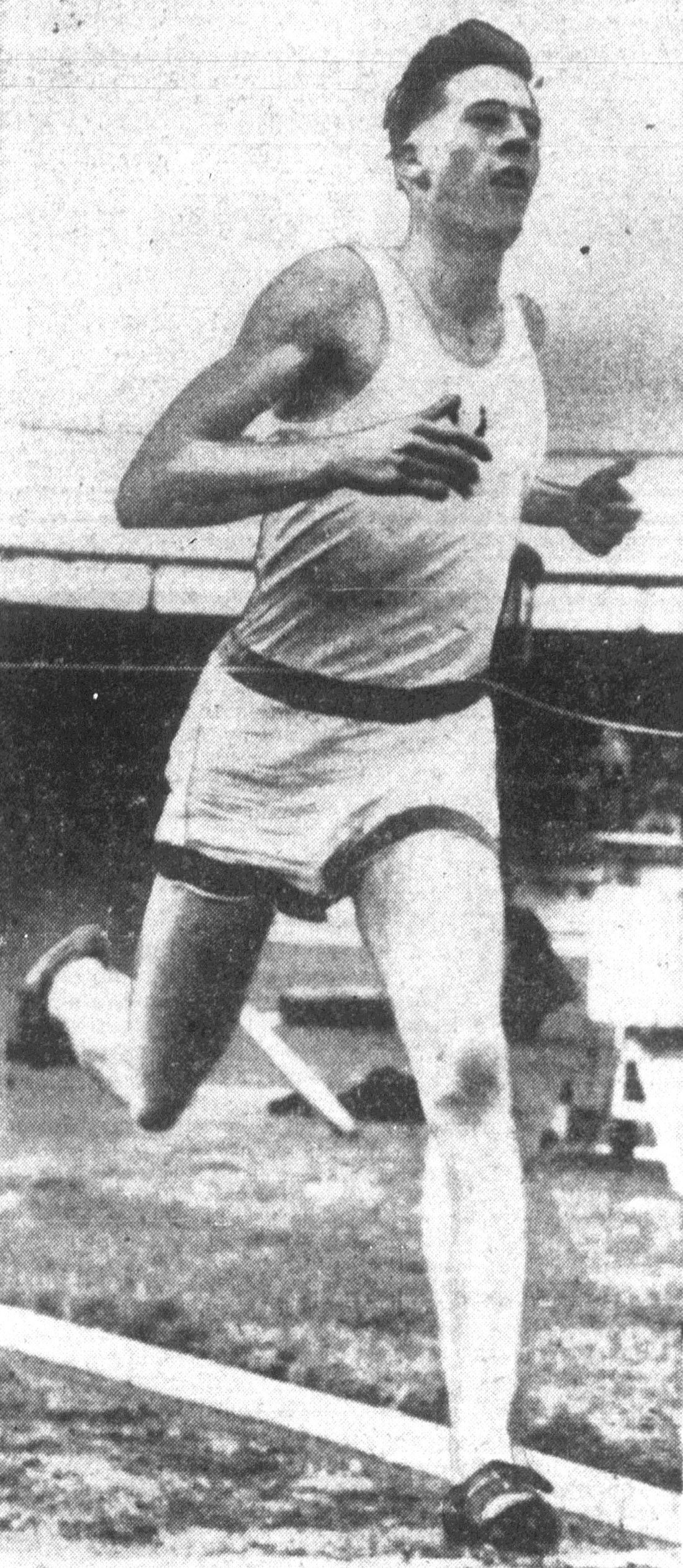
- Bannister in 1954: Unknown author, Public domain
Text written by Shining Champion.